


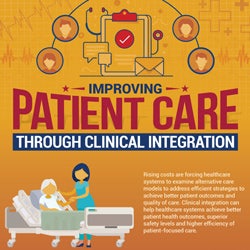
Healthcare innovation continues to reshape how providers deliver care, emphasizing the importance of seamless collaboration across disciplines. Clinical integration stands at the forefront of this transformation, fostering meaningful connections among healthcare professionals, improving communication, and streamlining workflows. When implemented effectively, it bridges gaps in patient care, enhances safety, and promotes better health outcomes. However, many medical facilities face challenges in achieving true integration due to limited access to essential tools and data-sharing mechanisms. Understanding how this approach works and its benefits can help healthcare organizations realize its full potential.
Blueprint for Success
The core of clinical integration involves coordinating care to reduce unnecessary procedures, overuse of resources, and to deliver maximum value to patients. Adoption hinges on factors like evolving payment structures, healthcare reforms, and advances in health information technology (IT). Historically, the focus was on mergers and acquisitions aimed at strengthening bargaining power with insurers and consolidating resources. Today, the emphasis shifts toward systemic models that promote ongoing collaboration, data sharing, and patient-centered care.
The rise of innovative payment models, such as value-based care, incentivizes providers to prioritize quality outcomes over service volume. These reforms encourage healthcare entities to invest in systems that support real-time data exchange, enabling more coordinated and efficient care delivery. Advanced health information systems offer platforms that integrate clinical, administrative, and financial data, allowing for comprehensive oversight of patient treatment pathways.
Moreover, solutions like electronic medical records (EMRs), health information exchanges (HIEs), and data aggregation platforms foster continuous innovation and adaptability in healthcare practices. These technological advancements are fundamental in supporting new reimbursement models and ensuring that providers can monitor both costs and quality metrics effectively.
Alignment
True integration extends beyond mere practices or principles; it requires persistent alignment across the entire care continuum. This involves harmonizing incentives, behaviors, and knowledge among all stakeholders—including hospitals, clinics, labs, pharmacies, physicians, and payers. Establishing shared goals and transparent communication channels ensures that everyone benefits from improved outcomes and operational efficiency.
Incentive structures must be clearly defined and measurable, rewarding collaborative efforts that lead to better patient care. When stakeholders have access to comprehensive information across multiple systems, they gain valuable insights that foster transparency and reduce financial risks. This shared knowledge base empowers providers to make informed decisions, implement preventive measures, and uphold high standards of care.
Continuous alignment also involves adapting to evolving standards and fostering a culture of ongoing quality improvement. Such an environment encourages feedback and collaborative problem-solving, ultimately leading to more cohesive and effective healthcare delivery.
Acquisitions
While consolidations and acquisitions have historically played a role in achieving integration, they are no longer viewed as the sole pathway. These strategies, often driven by the need to expand referral networks or negotiate better payer rates, carry significant risks and may not directly enhance information exchange or care quality. Instead, forming high-performing medical groups within existing organizations provides a more sustainable approach.
Interesting:
Developing such teams supports long-term sustainability by fostering leadership, efficiency, and adaptability to changing payment models. These groups help improve patient service delivery without the complexities and risks associated with mergers. Clinical integration—focused on care coordination rather than organizational consolidation—enables healthcare providers to extend their reach and innovate more effectively.
Effective governance is vital, especially in networks with diverse providers. Implementing a culture of continuous quality improvement and utilizing comprehensive tools ensures that information flows smoothly across departments. Regular feedback from physicians and staff, coupled with appropriate incentives like bonuses and higher salaries, motivates personnel to embrace collaborative practices and uphold the principles of clinical integration. Additionally, deploying communication systems and team-based approaches facilitates timely and coordinated care.
Improving Healthcare Decisions
Access to accurate and relevant patient information is critical for making informed clinical decisions. Interoperability enables providers to retrieve key data efficiently, but overwhelming amounts of information can hinder decision-making processes. It’s essential to have tools that deliver precise, filtered data at specific points within the workflow, allowing clinicians to act swiftly and accurately.
Without clear visibility into patient records, providers risk making decisions based on incomplete or outdated information, which can compromise patient safety and care quality. Effective systems empower clinicians to focus on the most pertinent details, supporting optimal outcomes and operational efficiency. As the field evolves, solutions like virtual reality (VR) and augmented reality (AR) are increasingly used to enhance training and decision-making capabilities in healthcare settings, including VR and AR applications in health. These immersive technologies are transforming how medical professionals visualize complex data and perform procedures.
Furthermore, innovative approaches such as immersive therapy—considered a frontier in mental health treatment—highlight the potential of advanced digital tools to improve patient engagement and therapeutic outcomes Learn more about immersive therapy.
—
By embracing robust clinical integration strategies supported by technological innovation, healthcare organizations can significantly improve patient safety, outcomes, and operational efficiency. Building a culture of continuous improvement and alignment ensures that all stakeholders work collaboratively toward shared goals—ultimately transforming the future of healthcare delivery.