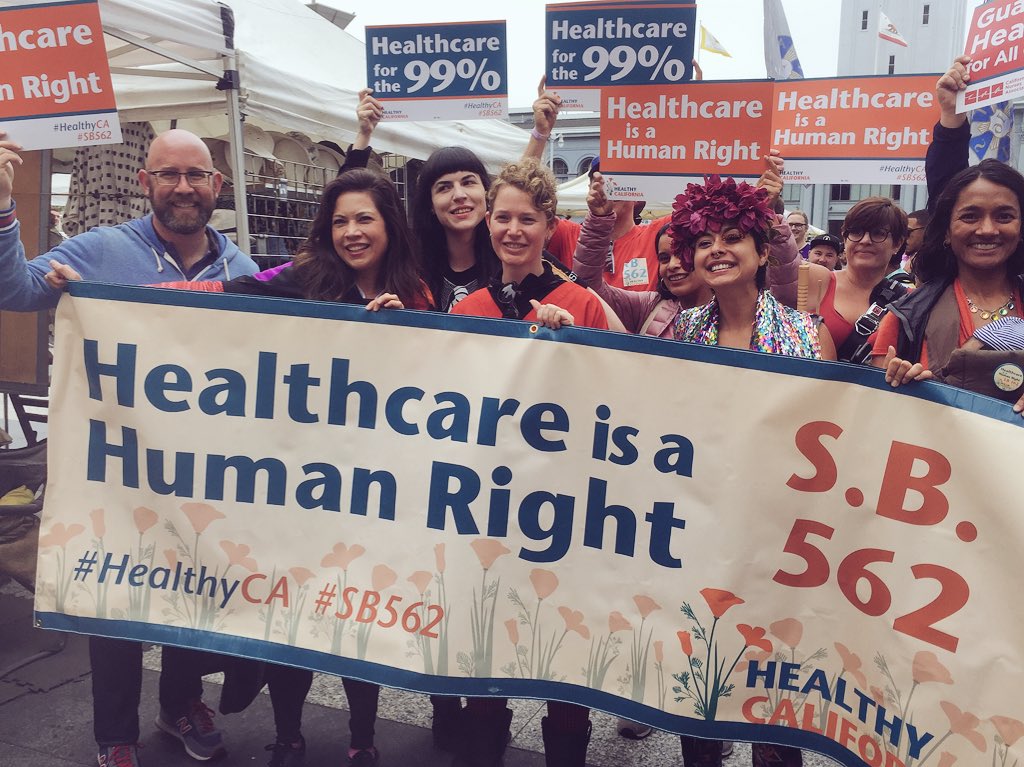
The persistent disparities in global healthcare access highlight the urgent need for a fundamental transformation in how health services are delivered. In a world where wealth inequality continues to widen—where the richest accumulate unprecedented fortunes while millions struggle to afford basic medical care—the question arises: what would a truly equitable and high-quality universal health system look like? This discussion explores a socialist approach to healthcare, emphasizing public ownership, social justice, and the rejection of profit-driven motives that currently dominate the sector.
The Failures of the Market-Driven Healthcare System
The current U.S. healthcare system exemplifies the failures of market-based solutions. Despite spending more per capita than any other nation, the United States leaves millions uninsured or underinsured, with approximately 29 million people lacking coverage even after reforms like Obamacare. According to the World Health Organization, the U.S. ranks 37th globally in healthcare efficiency, trailing behind countries like Morocco and Costa Rica. This discrepancy exposes the inadequacy of private insurance models that prioritize profit over patient well-being.
The dominance of a few large corporations further consolidates market power, with five insurance firms controlling 40% of the market, extracting billions through premiums and administrative costs. Major hospital chains and pharmaceutical giants profit immensely, turning healthcare into one of the most lucrative industries. Without government intervention, the market fails to provide universal care, instead cherry-picking patients based on profitability, leaving vulnerable populations behind.
Advocating for Single-Payer / Medicare for All
Growing public dissatisfaction with the current system fuels support for a single-payer or Medicare for All approach. Recent polls indicate that about 60% of Americans favor such a system, which would streamline healthcare by replacing multiple private insurers with a single government entity. This model retains private providers but removes the profit motive from insurance companies, simplifying administration and reducing costs significantly.
Funding such a system would involve taxing the wealthy, addressing the misconception that it would inflate healthcare expenses. Administrative costs have doubled since 1980, accounting for billions in unnecessary expenses. A single-payer system could eliminate much of this waste, saving hundreds of billions annually and ensuring faster, more equitable access to care. For details on how technological innovations are shaping healthcare, see predictions and trends about AI in healthcare.
Moving Toward a Nationalized Health System
While single-payer reform would mark a significant improvement, it does not fully address the systemic issues rooted in capitalism. Many countries, notably Britain, have established national health systems—like the NHS—that provide comprehensive, publicly funded healthcare from birth to death. The NHS, created after World War II, exemplifies how universal health coverage can be maintained through political commitment, despite ongoing neoliberal pressures.
A fully nationalized system would eliminate the enormous profits of hospital chains and pharmaceutical companies, reallocating resources toward patient care. Public ownership of these sectors would drastically lower costs, especially for prescription drugs. However, in a period characterized by economic crises and corporate influence, such health systems remain under threat. To truly realize this vision, socialist policies must be linked with broader social ownership and economic democratization.
Interesting:
The Socialist Perspective on Healthcare
A socialist approach advocates for the complete removal of healthcare from the influence of private profit. This entails nationalizing banks, energy firms, and major industries, including healthcare providers and pharmaceutical companies, to redirect resources toward human needs rather than corporate profits. Under socialism, healthcare would be free, accessible, and democratically controlled, with priorities set through public debate rather than market forces.
Investing in education and training for health professionals would enable a new generation of medical workers motivated by community service. Resources would be allocated based on community health needs rather than profitability, ensuring that marginalized and vulnerable populations—such as the elderly and disabled—receive comprehensive care. Policies would also guarantee reproductive rights, safe abortions, and high-quality food, promoting overall wellness as a societal goal.
Building a Movement for Single-Payer and Public Ownership
Advocating for healthcare reform at the state level is a vital step towards national Medicare for All. Such movements challenge the entrenched lobbying power of the insurance and pharmaceutical industries, which spent hundreds of millions of dollars annually influencing policy. The fight for single-payer exposes the deep ties between the Democratic Party establishment and corporate interests, emphasizing the need for independent, socialist candidates who refuse campaign contributions from big business.
Historical victories, like Britain’s NHS, demonstrate that mass mobilizations and revolutionary momentum can lead to substantial social reforms. As neoliberalism faces setbacks, the push for public ownership and universal healthcare can gain renewed strength. Achieving this requires a broad movement of workers, youth, and oppressed communities committed to ending the profiteering in health services.
Call to Action
- Fight for state-level single-payer systems as a step toward nationwide Medicare for All.
- Tax the wealthy to fund universal healthcare, free education, and infrastructure improvements based on renewable energy.
- Publicly own hospital chains and pharmaceutical corporations to eliminate profiteering.
- Support independent candidates committed to refusing corporate funding, building movements of workers and marginalized groups.
- Expand public ownership to key sectors like energy, transportation, and banking to democratize the economy.
By uniting around these goals, society can establish a healthcare system rooted in social justice, human dignity, and economic democracy, moving beyond the failures of capitalism to a future where health care is a right for all.
—
For further insights into how technological innovations are shaping healthcare, explore the future of AI in health. To understand how data analysis transforms medical research, see big data analytics in healthcare. Additionally, discover how XR technology is bridging gaps in treatment with servreality’s innovations.