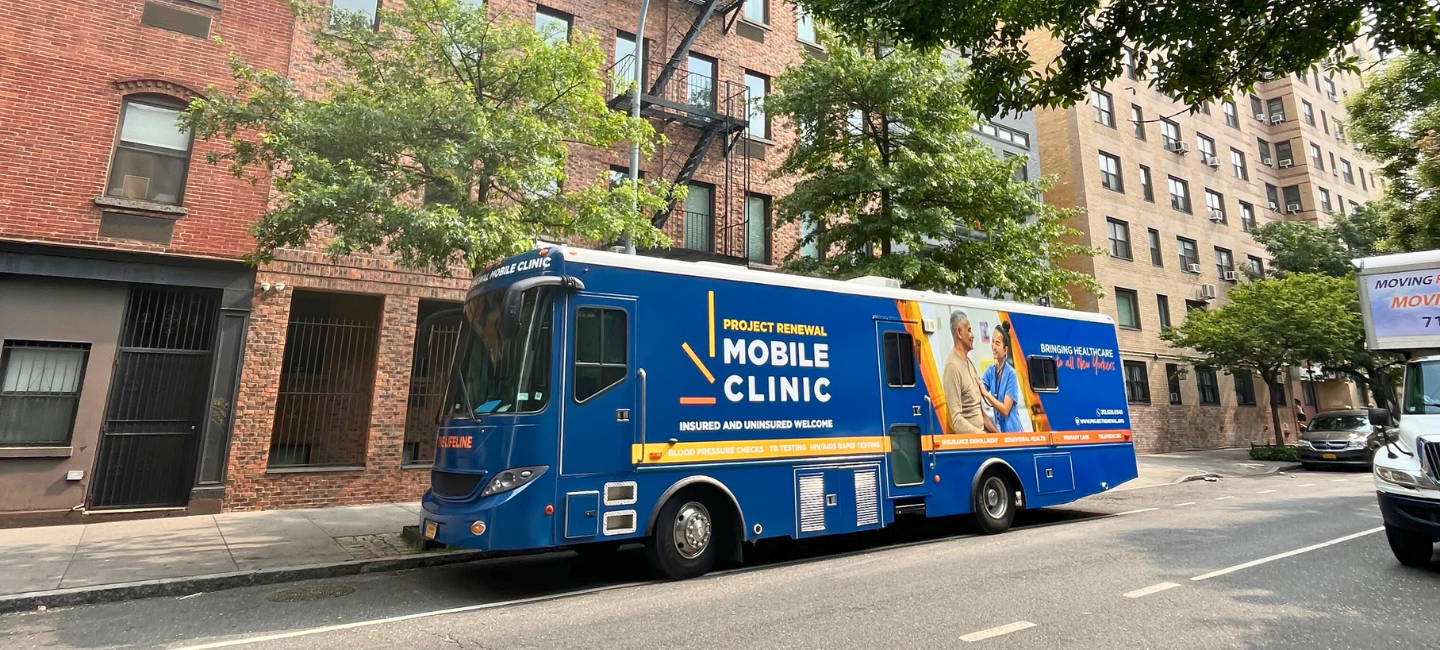
Providing healthcare services in underserved areas is crucial for ensuring equitable health outcomes. Mobile clinics serve as a vital bridge, bringing essential medical care directly to communities that face barriers such as lack of insurance, transportation issues, or mistrust of traditional healthcare systems. These services are especially important in cities like New York, where vulnerable populations—including the homeless—often struggle to access consistent, comprehensive medical support. By offering a range of services—from routine checkups to chronic disease management—mobile healthcare programs help reduce disparities and promote healthier communities.
Healthcare on Wheels for New York City
Project Renewal’s mobile clinics operate across New York City, delivering free, reliable, and holistic healthcare services to anyone in need, regardless of their financial situation or insurance status. These clinics are staffed by dedicated healthcare professionals committed to earning patients’ trust through compassionate care. Many patients consider their mobile healthcare providers their primary medical contact for years, establishing long-term relationships built on trust and mutual understanding. The clinics offer a broad spectrum of services, including physical examinations, vaccinations, HIV testing, basic medications, and treatments for chronic conditions like diabetes, hypertension, and asthma.
Accessing affordable healthcare remains a significant challenge for many, especially those experiencing homelessness. High rates of mental health issues and widespread mistrust of institutions further complicate outreach efforts. Mobile clinics are uniquely positioned to overcome these obstacles by providing consistent, accessible care directly within communities. The ongoing presence of these services ensures that vulnerable populations receive the support they need, wherever they are located.
The Impact of the Mobile Clinic
Beyond primary care, Project Renewal’s mobile clinics extend their services to include mental health support for those who require it. Mobile mental health services are a critical component in addressing the complex needs of at-risk populations. A recent industry analysis highlights how advances in artificial intelligence and digital tools are enhancing healthcare delivery, including in mobile settings, by supporting diagnosis, treatment planning, and patient engagement.
In addition to medical treatment, mobile clinics foster trust and build lasting relationships with patients who might otherwise avoid traditional healthcare settings. For example, Gothamist documented how our mobile medical team is establishing rapport with New Yorkers who may not otherwise access psychiatric services, ensuring they receive compassionate and consistent care. Such outreach programs are essential in reducing health disparities and ensuring mental health needs are addressed alongside physical health concerns.
Interesting:
Furthermore, understanding how healthcare systems operate in different regions can help optimize service delivery. You can explore how Canada’s healthcare system functions to draw lessons on effective healthcare models and improve mobile health initiatives.
Ensuring Data Security and Compliance
As mobile healthcare expands, maintaining strict standards for data privacy and security is paramount. Healthcare providers must adhere to regulatory frameworks that govern patient information, ensuring confidentiality and compliance at all levels. For those interested in the foundational principles guiding healthcare data management, resources like what data governance entails in healthcare provide valuable insights into safeguarding sensitive information and maintaining trust with patients.
The integration of advanced technologies in mobile clinics also highlights the importance of robust compliance measures to support effective and lawful healthcare delivery. These standards help protect both patients and providers, fostering an environment where innovative care can flourish securely.
—
Mobile medical services are transforming healthcare accessibility in urban environments by reaching vulnerable populations directly where they live and gather. As technology and community outreach strategies continue to evolve, mobile clinics will play an increasingly vital role in promoting health equity and delivering personalized, compassionate care to all members of society.