


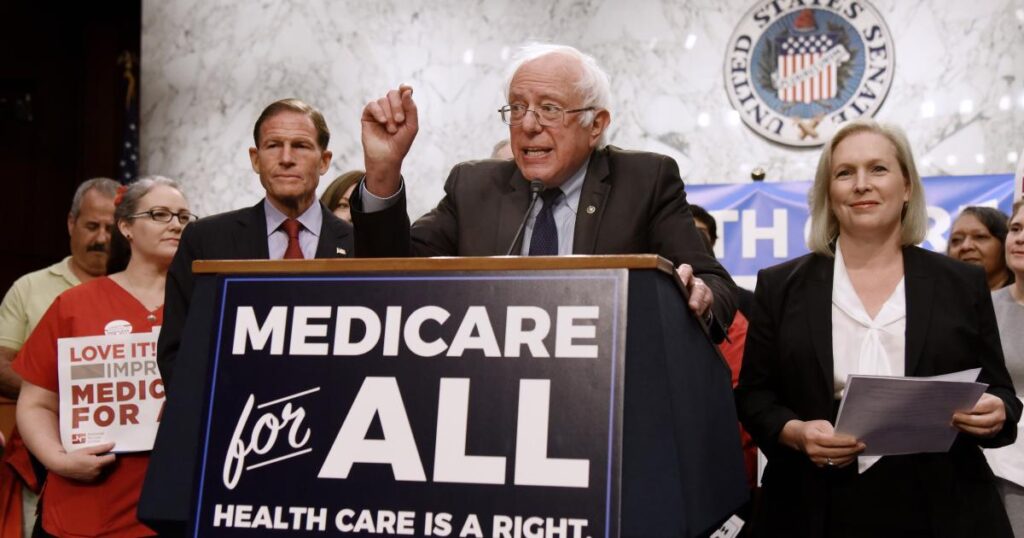
The idea of transitioning to a single-payer health care system is often presented as a pathway to universal coverage and cost savings. Advocates, including prominent figures like Sen. Bernie Sanders, argue that government-controlled healthcare would lead to more efficient and affordable services for Americans. However, beneath these promises lie significant economic, administrative, and access-related challenges that suggest such a transformation could worsen the current state of U.S. healthcare rather than improve it. A careful examination of the facts reveals that the implications of adopting a government-run system are far more complex and potentially detrimental than many proponents claim.
What Is a Single-Payer System?
A single-payer healthcare model is one in which the government serves as the sole financier and administrator of health coverage. In this setup, private insurance companies are either eliminated or severely restricted, with most existing public health programs absorbed into a centralized national insurance plan. While there are various proposals at both federal and state levels, the most well-known is Senator Sanders’ “Medicare for All” initiative. This plan would fund the national health program primarily through payroll and income taxes, replacing private insurance and current government programs like Medicare. Under this model, only the Veterans Administration and Indian Health Service would continue to operate largely as they do today, while the rest of the healthcare system would be integrated into the single-payer framework.
How Much Would It Cost?
Estimating the financial impact of a single-payer system depends on its specific structure, scope, and benefits. In the case of Sanders’ proposal, multiple studies project substantial costs and fiscal challenges:
- The Urban Institute estimates that over ten years, the plan would require approximately $32 trillion in spending, with only about half of that funding secured under current proposals.
- Charles Blahous of the Mercatus Center forecasts a 10-year increase in federal spending of around $32.6 trillion. He notes that even doubling existing federal income tax revenues would be insufficient to cover the added costs.
- Emory University economist Kenneth Thorpe estimates an additional $24.7 trillion in federal spending over a decade, with annual deficits averaging $1.1 trillion.
- The Center for Health and Economy projects an overall 10-year net cost of up to $44 trillion, along with annual deficits reaching $2.1 trillion.
These figures emphasize the enormous financial burden a single-payer system would impose on taxpayers and the federal budget, raising serious questions about sustainability and fiscal responsibility. For further insight into the complexities of the U.S. healthcare funding mechanisms, see a detailed guide on how the US healthcare system operates.
Would Single-Payer Reduce Administrative Costs?
One of the key arguments supporting single-payer is the potential for administrative savings by eliminating marketing, billing, and profit margins associated with private insurers. Advocates claim that a Medicare-like system would result in significantly lower administrative expenses—about 2 percent of total costs—based on Medicare’s current figures.
However, this oversimplifies the reality. For instance, in 2009, Medicare’s administrative per capita costs were higher than private insurance—$509 compared to $453—yet Medicare’s overall costs are lower as a percentage of total claims because its population is older and less healthy, leading to higher claims. Moreover, the administrative burden shifts from insurers to healthcare providers, which must navigate complex regulations, billing procedures, and paperwork mandated by Medicare. These compliance costs are substantial and contribute to inefficiencies. Additionally, Medicare struggles with waste, fraud, and abuse, resulting in billions of dollars lost annually—costs private insurers typically manage more effectively through their billing oversight. For a fascinating exploration of how technological advances are transforming medical training, see how virtual reality is enhancing surgical education.
Interesting:
- The many benefits of a single payer healthcare system
- Rethinking incentives in the pursuit of single payer healthcare
- Understanding the basics what is a single payer healthcare system
- The benefits of a unified national health insurance system
- The role and significance of electronic health records in modern general practice
How Would Single-Payer Control Healthcare Costs?
In a single-payer system, cost containment would rely heavily on government-imposed limits—such as global budgets, price controls, and payment reductions—since traditional market forces like supply and demand would no longer operate freely. Without a competitive market, controlling demand becomes impossible; thus, the government must regulate the supply of services to prevent runaway costs.
For example, Sanders’ plan proposes setting provider payments at Medicare rates and employing global budgets to cap expenditures. Charles Blahous estimates that provider payments could be slashed by as much as 40 percent under such policies, leading to significant reductions in reimbursements. Unfortunately, these cuts would likely have serious consequences for patient access and quality of care. Hospitals, nursing homes, and other providers would face financial strain, with the Centers for Medicare and Medicaid Services projecting that nearly half of hospitals and a majority of skilled nursing facilities could operate at negative margins if such payment reductions are implemented. For a deeper understanding of how innovations in virtual reality are being used to train future surgeons, visit training surgeons with virtual reality.
Would Taxes Increase Significantly?
Funding a single-payer system would require a monumental increase in taxes—roughly doubling current levels. Sanders has proposed a combination of payroll taxes, income taxes, and various other levies on investments and high earners. However, even these proposals fall short of covering the full costs. Estimates suggest that total federal taxes would need to reach approximately 20 percent of income, impacting a broad swath of Americans:
- About 71 percent of working families would face higher taxes.
- A significant majority of Medicaid and Medicare beneficiaries would contribute more.
- Many young workers and small-business employees would also see increased tax burdens.
Ultimately, most Americans would pay more for health coverage under a fully funded single-payer system than they do today, contradicting claims of cost savings. For more insights on the structure of U.S. healthcare funding, refer to a comprehensive guide on how the US healthcare system works.
Would Everyone Have Equal Access to Care?
Not necessarily. Despite the promise of universal coverage, experience from countries like Canada and the UK demonstrates that government-run systems often lead to long wait times and restricted access, especially for elective procedures. In 2017, Canadians faced waiting lists for over a million procedures, with median waits for joint replacements ranging from 20 to 52 weeks. Similarly, the National Health Service in Britain canceled thousands of elective and urgent surgeries due to staffing shortages and seasonal illness spikes. While private insurance exists in Britain, it incurs additional costs and is often the only option for those seeking quicker or more comprehensive care. Canada also restricts private insurance for core services, leading many Canadians to seek treatment abroad or pay out-of-pocket. These realities highlight that government-controlled healthcare does not guarantee timely or high-quality care. Americans deserve a system that prioritizes quality, efficiency, and timely access rather than restrictive and overstretched government programs.
In conclusion, the implementation of a single-payer system in the United States would impose enormous costs, diminish care quality, and restrict access for many. Instead of rushing toward a government-controlled model, Americans should consider reform approaches grounded in transparency, innovation, and market-based competition. To learn more about how technological advancements are shaping healthcare, explore virtual reality applications in medical training. A balanced, sustainable system is essential for ensuring the health and well-being of all Americans.