


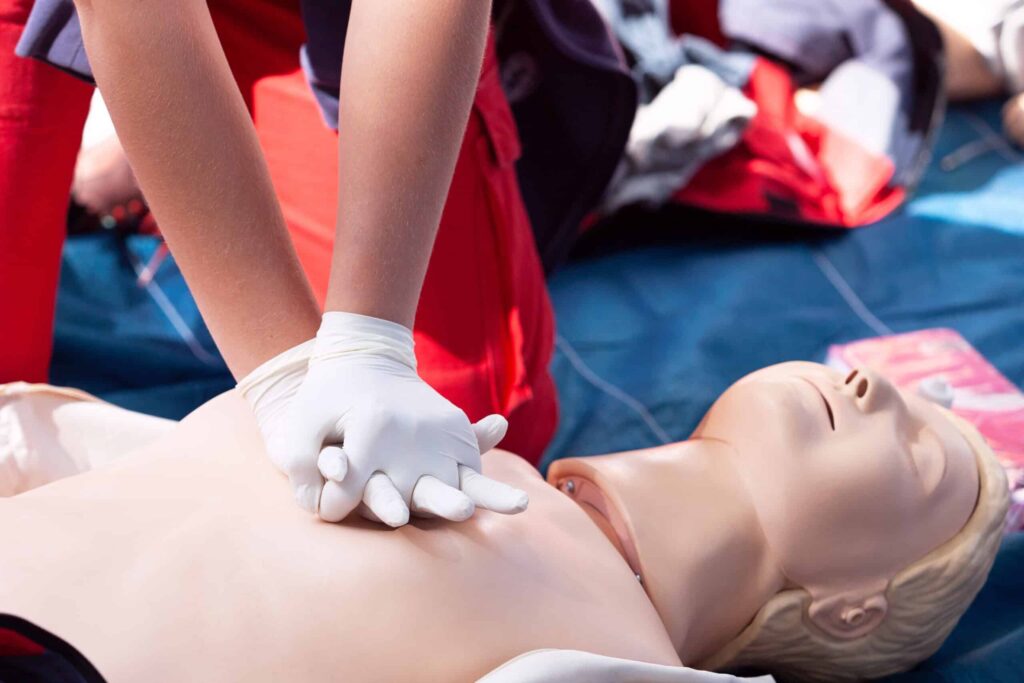
A clear grasp of life-saving certifications is essential in emergency response situations. Many people mistakenly believe that BLS (Basic Life Support) and CPR (Cardiopulmonary Resuscitation) training are interchangeable. However, these certifications serve different purposes and are tailored to distinct audiences. Knowing the differences between them not only helps in selecting the right training but also prepares individuals to respond effectively during critical moments. This overview will clarify what each certification entails, their respective training scopes, and the importance of obtaining the appropriate credential for your role or industry.
—
What Is CPR and AED Certification?
CPR, or Cardiopulmonary Resuscitation, is an urgent, lifesaving procedure performed when someone’s heart has stopped beating. The primary objective of CPR is to maintain blood circulation and oxygen flow to vital organs until professional medical help arrives. According to the American Heart Association, performing CPR promptly can significantly increase a victim’s chances of survival—doubling or even tripling the likelihood of recovery.
An Automated External Defibrillator (AED) is a compact, portable device that can analyze a person’s heart rhythm and deliver an electric shock if needed to restore a normal heartbeat. Using an AED in conjunction with CPR is crucial during sudden cardiac arrests, especially outside of hospital settings. Proper training in both CPR and AED use ensures that bystanders can act swiftly and confidently when emergencies happen.
For those interested in acquiring CPR and AED certification, many training providers, including Rescue Training Institute, offer courses tailored to the general public and non-medical personnel. These classes typically last around three hours, are certified by reputable organizations like the American Safety & Health Institute, and require renewal every two years to keep skills current. During the course, participants learn how to recognize emergencies, perform chest compressions and rescue breaths, and handle choking or overdose situations. Such training is vital for teachers, coaches, childcare providers, and employees who want to be prepared for unexpected health crises.
—
What Is BLS Certification?
Basic Life Support (BLS) training is designed primarily for healthcare providers and first responders. According to the American Red Cross, BLS encompasses the essential skills necessary for responding to cardiac arrest, respiratory distress, or airway obstructions across all age groups. This certification emphasizes advanced techniques such as high-quality CPR, defibrillation, and relief of airway blockages, often involving scenarios encountered in clinical or emergency medical settings.
The American Heart Association’s BLS course is tailored for professionals like nurses, paramedics, EMTs, dentists, and other healthcare workers. It covers the assessment of emergency scenes, team response protocols, use of advanced airway management tools like bag-mask devices, and the application of AEDs in complex situations. The training typically takes about four and a half hours, with certification valid for two years.
Obtaining a BLS certification not only fulfills many employment requirements but also ensures that healthcare providers are prepared to deliver immediate, effective life support in critical situations. The course also emphasizes teamwork and communication—vital components when managing real-life emergencies in medical settings.
—
Is BLS the Same as CPR?
While all BLS courses include CPR training, the reverse is not true—CPR alone is a subset of BLS skills. BLS is an advanced level of training that incorporates CPR along with other lifesaving techniques suitable for professional responders. In contrast, CPR certification from organizations like ASHI is more basic, aimed at laypersons and those seeking general emergency skills.
BLS is more comprehensive, covering various emergency scenarios and medical protocols, making it essential for clinical roles. Conversely, CPR certification typically focuses on basic rescue techniques suitable for everyday situations outside healthcare environments. Remember, BLS certification is often a prerequisite for employment in medical fields, while CPR certification is valuable for general safety awareness. Staying current with industry standards, such as the American Heart Association’s BLS for Healthcare Providers, ensures you’re prepared to save lives in many unpredictable emergencies.
Interesting:
- Understanding the distinction between bls and cpr a complete guide
- Understanding the key differences between bls and cpr
- Understanding the distinction between masseuse and massage therapist
- Understanding insurance claims the complete guide to the process and how it works
- Understanding your acupuncturist education certification and expertise
—
BLS vs. CPR AED Certifications
| Feature | ASHI CPR & AED | AHA BLS | Target Audience | Certification Body | Age Range Covered | Team Response Training | Bag-Mask Skills | Clinical Job Requirement | Focus on Medical Scenarios |
| ——– | ————– | ——- | —————– | ——————- | —————– | ——————— | ————– | ———————— | ————————– |
| Scope | Basic CPR and AED | Advanced life support | General public | ASHI | Adults, children, infants | No | No | No | Limited |
| Target Group | Everyday responders | Healthcare professionals | Healthcare providers | AHA | Adults, children, infants | Yes | Yes | Yes | Strong emphasis |
Choosing between these certifications depends on your role and the level of emergency response required. For example, healthcare workers will benefit from the comprehensive training provided by the AHA BLS course, which covers team dynamics and advanced airway management. Meanwhile, the general public can obtain basic CPR and AED certification through organizations like Rescue Training Institute, equipping them with essential skills to assist in emergencies.
—
How to Get Certified Through Rescue Training Institute
Rescue Training Institute offers both the American Heart Association’s BLS certification and the American Safety & Health Institute’s CPR & AED course. Their training programs are designed to fit your specific industry needs, whether you are a healthcare professional or a community responder. With over 30 years of experience, RTI provides convenient options, including on-site training at your location. Participants consistently find their classes engaging, practical, and impactful.
Obtaining certification in lifesaving techniques is one of the most meaningful steps you can take to prepare for emergencies. Whether you’re developing a health app or working in a clinical setting, understanding the nuances of emergency response can make all the difference. When developing healthcare solutions, it’s also helpful to consider the latest technological advances, like the integration of virtual reality and augmented reality into training programs, which enhance learning experiences. Additionally, for those interested in the intersection of medical technology and innovation, exploring topics such as from molecules to market the new era of pharmaceutical visualization can provide valuable insights.
For more detailed guidance on which certification suits your needs, or to learn about emerging healthtech trends, visit the 7 things you need to pay attention to when developing a healthcare application.
Contact Rescue Training Institute today to find out how you can become certified and better equipped to save lives in critical moments.